What facility managers should check when a commercial pool loses water
Start with the obvious: is it really a leak?
Before calling in a specialist, a facility manager can do a few simple checks that separate a true leak from normal water loss. Commercial pools lose water through evaporation, splash-out, and backwashing, so a drop in water level is not always a leak. The first step is to rule out the everyday causes that can fool anyone.
Track the water level over a full cycle
Mark the water level at the skimmer with a pencil or a piece of tape, then run the pump on its normal schedule for 24 hours. Do not add water during that period. Check the mark again after the pump has run and after it has been off. A leak in the circulation system often shows up only when the pump is running, while a shell leak may be visible when the pump is off. Comparing both readings gives you a clearer picture of where the problem might be.
Check the water meter
A commercial pool can use a lot of water for routine maintenance, but a sudden spike on the water meter is a strong signal. Note the meter reading, avoid any water use on the property for a set period (say, two hours with the pool pump off), and then recheck the meter. If the meter has moved, the leak is likely on the supply side, somewhere between the meter and the pool. This test is simple and costs nothing, yet it often confirms that a leak exists before any digging or equipment testing begins.
Inspect the equipment pad
Pumps, filters, heaters, and chemical feeders all have seals, gaskets, and connections that can fail. Look for wet spots, mineral deposits, or rust around fittings. A small drip from a pump seal may not show up as a big water loss at first, but over days it adds up. Listen for unusual sounds, such as a pump that sucks air or a valve that chatters. These noises can indicate a suction-side leak that pulls air into the system rather than letting water out. Air in the system reduces filtration efficiency and can damage the pump over time.
Examine the pool shell and surface
Cracks in plaster, gunite, or fiberglass are obvious places to check. But not all cracks leak. A hairline crack that is dry above the waterline may be cosmetic, while a crack that changes size with temperature or that has algae growing near it may be letting water escape. Run your hand along the surface at the waterline, feeling for missing grout or rough spots in tile. In commercial pools, the expansion joint between the deck and the pool shell is a common leak point. If the sealant there has pulled away, water can travel behind the shell and erode the soil underneath.
Look at the plumbing network
The pipes that carry water to and from the pool are buried, so you cannot see them directly. But you can look for signs of a leak in the ground around the pool. Soft or wet soil, sinking pavement, or lush patches of grass in an otherwise dry area all point to a leaking pipe. In a public pool setting, check the area around the main drain and the return lines. If the ground feels spongy near the equipment pad, the leak may be in the pipe trench. A facility manager can mark these areas for the leak detection team, saving time on the diagnosis.
Test the fill valve and float
Many commercial pools have an automatic fill valve that keeps the water level steady. If the float sticks or the valve seat wears, the fill valve can run continuously, wasting water and making it look like the pool is losing water when it is actually overflowing. Lift the lid on the fill valve assembly and watch it through a cycle. If water flows when the pool is already full, the valve needs adjustment or replacement. This is a simple mechanical check that any facility manager can do without special tools.
Review the backwash procedure
Backwashing a sand or DE filter sends a large volume of water to waste. If the backwash valve does not close fully, or if the multiport valve leaks internally, water can continue to bypass the filter and go to the drain even during normal filtration. Watch the sight glass on the waste line during a filter cycle. If water trickles out when it should not, the valve needs service. A facility manager who knows the normal backwash volume and frequency for the pool can quickly spot when something is off.
Check the main drain and sump
Some commercial pools have a sump pit or a secondary drain system to handle groundwater. If the sump pump runs more often than usual, or if water appears in the sump pit during dry weather, it may be collecting water that has leaked from the pool. This is a subtle sign, but it is worth noting. A dry sump that suddenly has standing water suggests that the pool shell or a pipe is losing water into the surrounding soil.
Facility managers who perform these checks before calling a specialist save time and money. They arrive at the leak detection appointment with a clear history of the problem, which helps the technician focus on the most likely areas. For pools that are part of a larger facility, keeping a log of water usage, chemical consumption, and inspection records makes future diagnostics even faster.
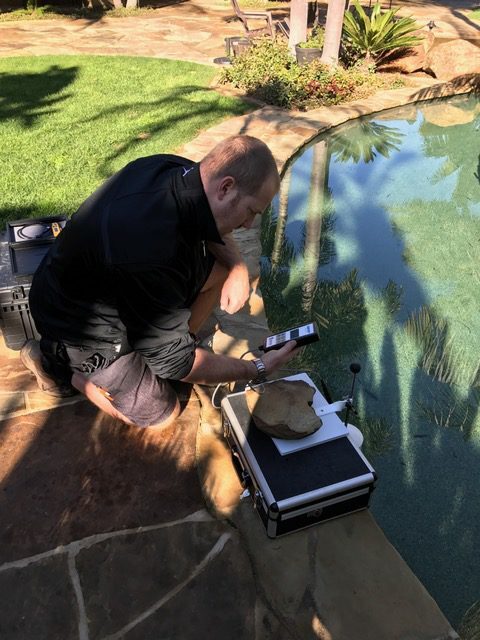
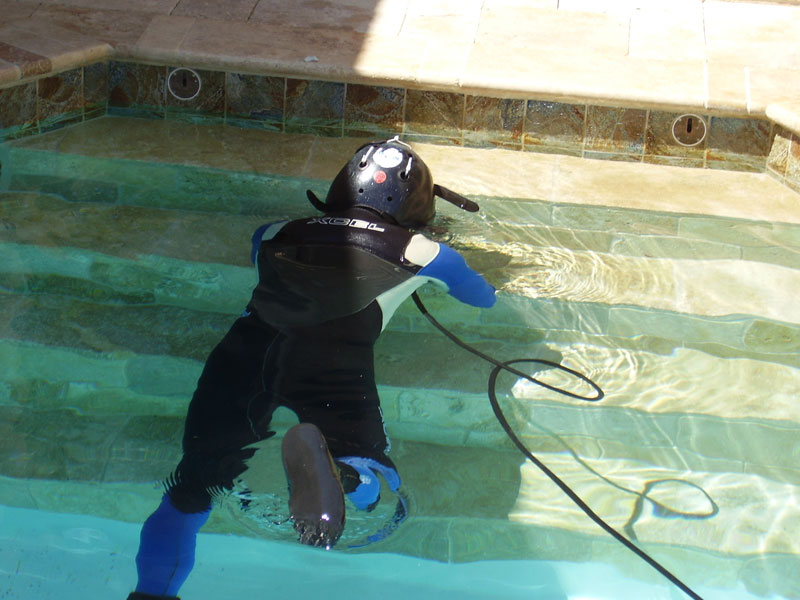
When the preliminary checks point to a leak that is not visible, professional leak detection is the next step. Companies like Swim Care Pool Services use specialized equipment to locate leaks in the shell, plumbing, and circulation system without digging up the entire deck. Their approach is non-invasive and precise, which is important for a commercial pool that needs to stay open or return to service quickly. A facility manager who has done the groundwork can hand over a clear set of observations, making the inspection more efficient.
Once a leak is found and repaired, the facility manager should verify the fix by repeating the 24-hour water level test. If the water level holds steady through a full pump cycle, the repair worked. If not, there may be a second leak that was masked by the first one. Multiple leaks in older pools are not uncommon, so a follow-up check is always a good idea.
Understanding the difference between normal water loss and a true leak helps a facility manager manage operating costs and avoid unnecessary repairs. Evaporation, for example, is higher in hot, dry, or windy weather, and splash-out increases with heavy use. A commercial pool that loses water only during busy hours may simply need a lower water level or a different skimmer weir adjustment. But a pool that loses water steadily, day and night, rain or shine, almost certainly has a leak that needs professional attention.

For facility managers who oversee multiple pools or large aquatic centers, having a standard checklist for suspected leaks keeps the process consistent. Each check in the sequence builds on the last, from the simplest observation to the more involved tests. By the time the leak detection team arrives, the facility manager has already eliminated the easy causes and narrowed the search area. That partnership between the facility staff and the detection service is what gets a commercial pool back to normal operation with the least disruption.